
The Perils of a Wandering Mind

By Steve Freedman
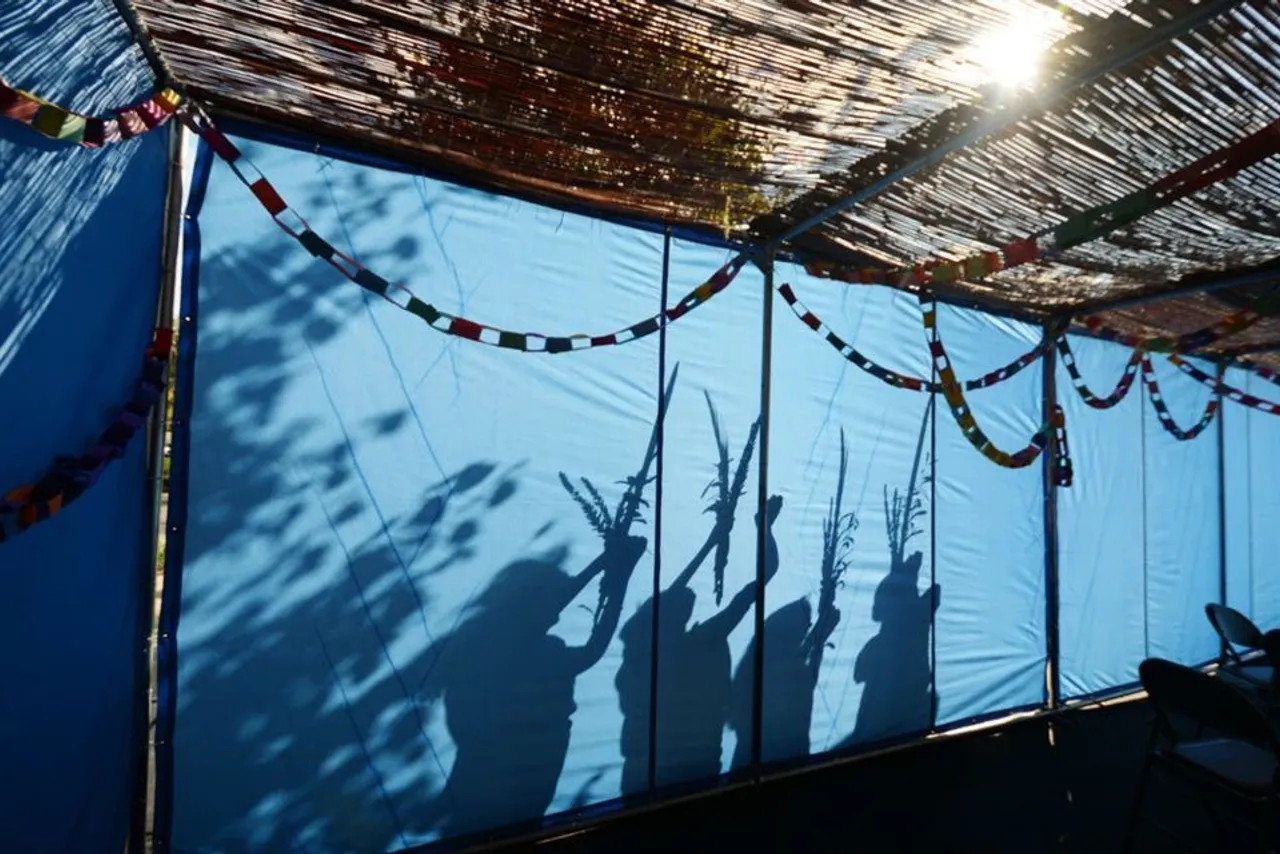
Sukkot is known as Z’man Simhateinu – The time of our happiness (rejoicing). It seems appropriate that during Sukkot we think about happiness and what it is.
This makes me think of the famous quotation from Pirkei Avot [Ethics of the Fathers], Who is rich? He who is happy with his lot, and how far we seem to have strayed from this state of being. A 2010 study from Harvard University sadly supports this notion: It found that people spend 46.9 percent of their waking hours thinking about something other than what they’re doing, and this mind-wandering typically makes them unhappy. “A human mind is a wandering mind, and a wandering mind is an unhappy mind,” says the study’s authors. “The ability to think about what is not happening is a cognitive achievement that comes at an emotional cost.”
In other words – as Mark Twain said – some of the worst things in my life never happened!
“Many philosophical and religious traditions teach that happiness is found by living in the moment, and practitioners are trained to resist mind wandering and to ‘be here now,’” say the researchers. “These traditions suggest that a wandering mind is an unhappy mind.” This research suggests that they may very well be right.
I began to wonder, what would Judaism say about this? I think the answer can be found in the “Brakhah” – blessings that we say. Brakhot [blessings] help to bring us into the moment – to sanctify the moment. In the Talmud – Masekhet Berakhot – we learn that we are prohibited from deriving enjoyment from this world without a blessing. After the blessing, it is ours to enjoy. What can we learn from this?
We need to take the time to thoughtfully appreciate what we have and from where these moments and benefits come. In Judaism, I believe that the Brakhah gives us structure to be in the moment – to enjoy, appreciate, to sanctify! The Sukkah does that too. Every time we go into a Sukkah, we are reminded not only of our closeness to God, should we choose to be close, we are also reminded that a Sukkah is a temporary structure, subject to conditions that can change in a moment; just like our lives. It is in the Sukkah that we are reminded to rejoice and to be grateful for what we have. That while life, like the Sukkah, can be fragile, it is also filled with blessings and gladness. Life is fully lived when we can be in the moment, recognize them and rejoice in them.
In our society we often confuse happiness with pleasure: People think happiness is based on what we achieve and acquire – “My whole life would improve and I would be happier if I had a new 4G television…I just need a better job with more money then I can relax and be happy… If only I met the perfect person …got the latest and greatest iPhone…”
We get the 4K television and what happens? For a whole week we’re thrilled. Then we go right back to being unhappy – because what we derived was pleasure, not happiness. Pleasure is transitory. Then the mind wanders again – either to remorse for spending too much or regret because we still don’t have what we want. We’re constantly pushing to the future – what we want next, what we need to worry about next, what will anger us next…
Who is rich? He who is happy with his lot. As the study indicates, happiness is not a happening; it’s a state of mind. We can have everything in the world and still be thoroughly unhappy. Or we can have relatively little and feel unbounded joy. Happiness comes from mastering the art of appreciating and consciously enjoying what each of us already has and being in that moment! The Brakhah helps us focus. And the holiday of Sukkot reminds us of this as well. We rejoice in this time – surrounded by what truly brings happiness – our loved ones and friends; sharing this sacred time.
The next time you go into your Sukkah (or go to a friend’s Sukkah), look up to the stars and remind yourself that our lives are filled with true gifts and blessings, often wrapped in moments, even when surrounded by the fragile nature of life. When we understand this, then our hearts will be filled with true and lasting happiness.

Schechter Bergen admits students of any race, color, national and ethnic origin to all the rights, privileges, programs, and activities generally accorded or made available to students at the school. Schechter Bergen does not discriminate on the basis of race, color, national and ethnic origin in administration of our educational policies, admissions policies, scholarship and loan programs, and athletic and other school-administered programs.