
Reflections from Israel - Blog #4

By Steve Freedman
Days roll into the next. Is it Thursday? Are we flying out tonight? I know it is, because we went to the Kotel, davened at the Robinson Arch, and read Torah. We were the only group not to cancel at the arch. It was quiet all around, but our davening was filled with Kavanah and tears.
From there we went to the Jerusalem Chamal, the relief center that was created soon after October 7. It was founded by volunteers from Shalem College in Jerusalem and essentially run by students and teachers, all volunteers, and supported by many more volunteers.
They call themselves The Jerusalem Civilian Command Center, a wartime initiative comprised of civil organizations that all came together when the government did nothing. They provide the infrastructure to receive donations and disperse immediate funds.
During the recent protests against the government's proposed court reforms, people organized through massive WhatsApp contacts. After the October 7 attack, using the same contacts from the protests, they were able to instantly mobilize efforts to help. Blood was needed and word went out through the WhatsApp groups. Medical supplies were needed and WhatsApp calls went out. And from there the civil organizations began to formally organize. Most of the help needed for the nearly 200,000 displaced people is coming from Chamal and the organizations working together. In other words - it’s people helping people and most of them are young people. Just take Shalem college for instance. Over 60% of the students were called up, and the rest are serving as an army of volunteers.
Shira was a student majoring in Middle Eastern studies, now she is helping to run the Chamal. Gila was a Hebrew instructor and now she serves as the Development and Support person for the Command Center. Everyone’s lives have been turned upside down and yet so, so many have just dropped everything to help.
At the Jerusalem Chamal, they have not only become a distribution center, they opened a large, free, clothing store for all of the displaced people who were forced to flee their homes in the South and North with literally just the clothing on their backs. The store is staffed with volunteers who help people find clothing that fits and help them feel good about their fashion choices. It is also a place to get the children out of hotel rooms where they can play and pick out toys.
In addition, a large food store was opened where the displaced people can get food and toiletries. Initially volunteers would bring everything to the hotels, but now they are encouraging everyone to get "out and about" to help them to begin to regain some sense of control over their lives. It is a remarkable effort. We watched in awe as the volunteers worked tirelessly. It looked like a disorganized, organized operation that all came together in just weeks - largely through the efforts of these young people.
For several hours we helped. We schlepped big boxes (a lot), sorted boxes and boxes of clothing, and restocked shelves with food and supplies. There were many people there, all working for a common purpose, for each other, for our people.
Before returning to the hotel we stopped at the Fuchsberg Center to have a meaningful study session with Rabbi Joel Levy, the Rosh Yeshiva. He enabled us to use texts to help us make connections through the text of what we had felt and experienced these last few days.
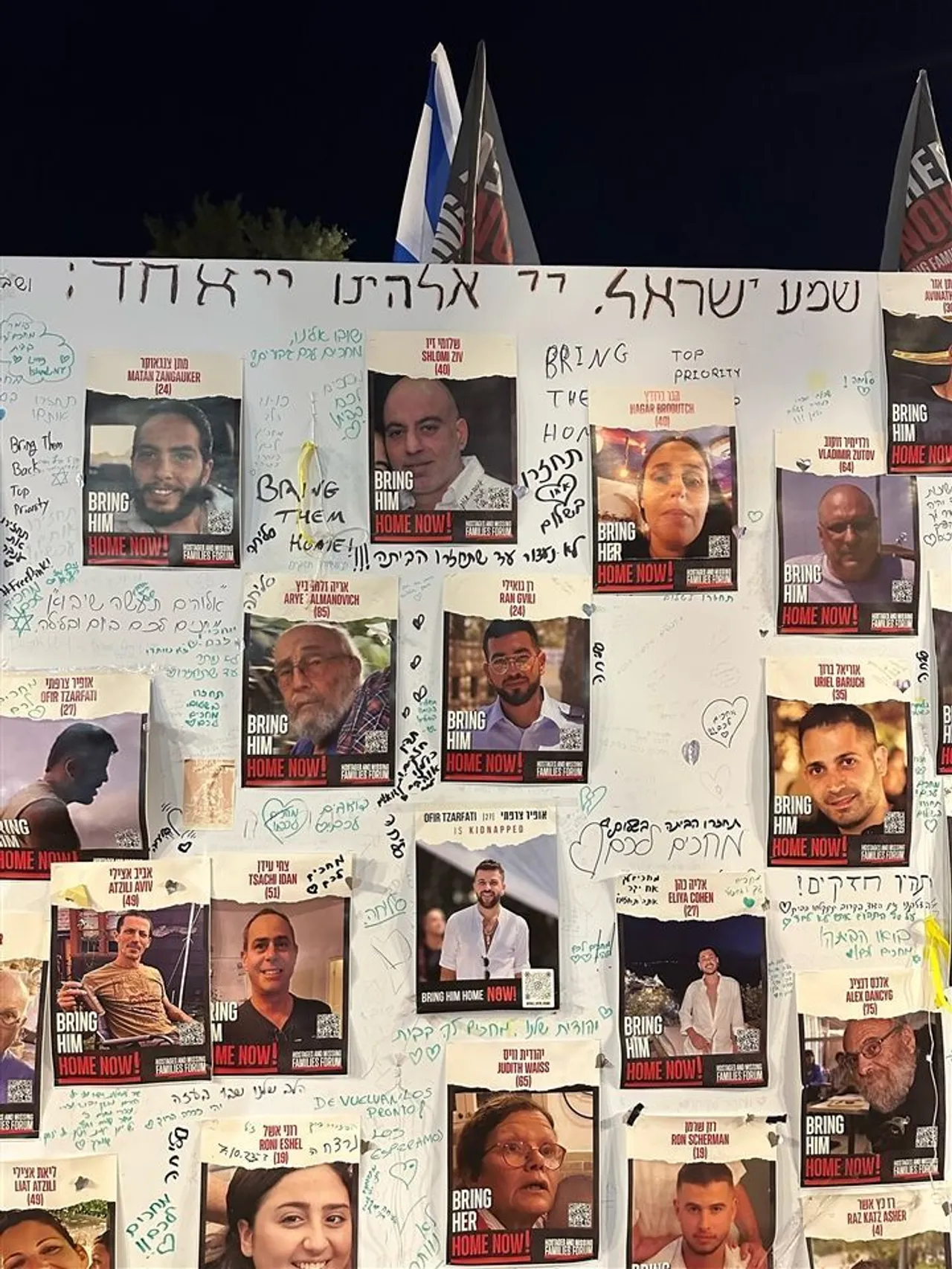
Finally, before returning to the airport, we stopped at the Tel Aviv Museum of Art, where on the plaza, they created “Hostages Square.” There we experienced all sorts of artistic installations to help keep the focus on the hostages and missing persons. It was nothing less than heart wrenching. Each piece, each section, packed an emotional gut punch. Posters, paintings, the Shabbat tables, the piano, the Gan for the missing children with dolls and toys all tore at my heart.
I am finishing this blog as we enter the airport. Leaving Israel is always hard. This time it is impossible. I want to stay. I want to be here with our people. I desperately want to continue helping. My heart is broken.

Schechter Bergen admits students of any race, color, national and ethnic origin to all the rights, privileges, programs, and activities generally accorded or made available to students at the school. Schechter Bergen does not discriminate on the basis of race, color, national and ethnic origin in administration of our educational policies, admissions policies, scholarship and loan programs, and athletic and other school-administered programs.