
Reflections from Israel - Blog #2

By Steve Freedman
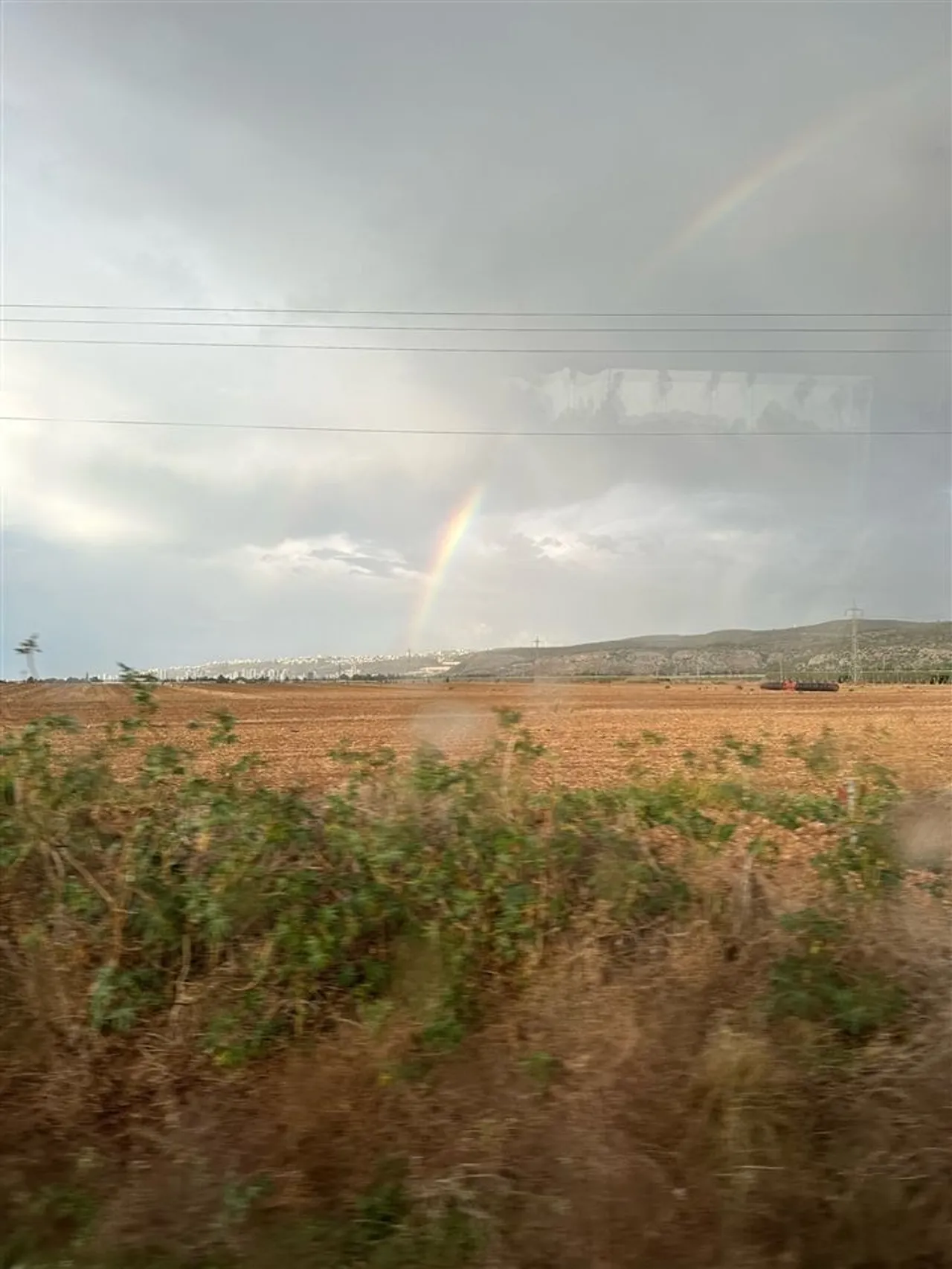
Last night we stayed at the Dan Carmel in Haifa. There are nearly 500 people staying there, all displaced from their homes in the North. Grandparents, parents, and children all calling the hotel home. This morning Joan and I spoke to two women who had to leave their Kibbutz and everything behind. I asked about the children and what they have been doing. It has been difficult. The children have not been in school and many of the adults have been trying to organize activities. Finally, today, local schools were able to absorb them and they were getting ready to go.
After breakfast we headed to Geva Carmel. On the bus we davened Shacharit together. Tefillah felt so different this time. When we approached the Shema, Rabbi Scheff shared a sentiment with the group that was exactly what I was thinking. As I gathered my tzitzit for Shema I thought of Amir, from yesterday, and how he told us he would not open the safe room until the soldier recited the words of the Shema with a perfect accent. I will never recite the Shema again quite the same way or without thinking of Amir. It will be forever different. During the Amidah, when we recited the phrase for rain, it felt relevant in a way it normally doesn’t. How often do I get to say those words and actually be in Israel, the place we are asking for rain? This was only my second time.
Then we recited Hallel for Rosh Chodesh. I looked up during the prayer and saw parents walking their children to school. A couple was waiting for the bus. People were walking on the sidewalks beginning their day. And then I saw the sea, right in front of me at the moment we recited the words:
מִן הַמֵּצַר קָרָאתִי יָהּ. עָנָנִי בַּמֶּרְחַב יָהּ
“In my distress I called to the Lord, He answered by setting me free.”
ה' לִי לֹא אִירָא. מַה יַעֲשֶׂה לִי אָדָם
“The Lord is with me, I shall not fear; what can mortals do to me?”
I wanted to cry at that moment and again as I write this blog. The sea. The very sea that we hear protestors invoke when they say “From the river to the sea.” I was looking at it, during those words - in my distress. The Lord is with me. I shall not fear.
It was so painful. I look at those innocent people out and about, not far from the sea. What cruel words these people say. Do they know what it means? How horrible it feels to those who live here, who know that this is their home? To us, who know that this is our rightful Jewish homeland? Everything about the “situation” as Israelis like to call it, is so profoundly real. So profoundly urgent. The threat is so real. It feels like the fight for our second independence - as more and more people are calling it.
Yes, prayer can move us, move me.
When we arrived at Geva Carmel, we were met by Ori, who is responsible, with his family, for the crops on the farm. He explained that normally the crops that they grow go to the hotels, markets, and restaurants. But right now, everything is going to the troops. Knowing that made our nearly five hours of pruning eggplant plants even more meaningful. This is work usually done by Thai workers, but they have all left the country. It was very hot and humid in the fields but it was meaningful and purposeful sweat. Knowing that the IDF are going to get the eggplants when they are ready for harvest made it easy. Boy, were we all dirty.
Omer invited us back to his house for snacks and a break. He and his sister just happened to have tons of snacks and drinks for us as we sat on the porch and ate and spoke with each other. We then returned to our work for a little while longer. Omer did not think it was a good idea for us to continue in the afternoon because the hothouses where the eggplants were growing were now oppressively hot.
Instead, we performed another mitzvah. We went to Ein Hod, an artist colony that has seen no business for a month. Most stores were closed, but a few were open. We were given a tour and met with four of the different artists. And then we went to work, buying the art to support these artists and the economy. Having Joan with me, I can report it was “work” well done.
Our last stop was Kfar Ahava. Ahava is a therapeutic organization with the goal of providing children and youth at risk with an environment that fulfills all of their physical, emotional, educational, and social needs. It is structured in Family Home Units, in which couples move in with their own children into the residential home-care units and serve as a model of a normal family for children and teenagers at risk. You have to see it to appreciate the extraordinary work that they do. They literally save hundreds of children by providing this amazing environment. We met some of the leading staff, heard their compelling story, did an art project, and ate dinner with some of the older girls who had made soup and desserts for our visit. Leave it to Israel to come up with a non-institutional way of helping children who cannot live at home. It is a safe and loving place. It was certainly an inspirational way to end the evening.
We just arrived in Jerusalem. I am truly in a constant state of being deeply moved. It is nothing that I have ever experienced before. Everything is different, everything means more. It's Intense. They call us brave for being here. It is every Israeli living in Israel that are the true brave ones. They are there for us. They are the protectors and guarantors of the State of Israel. It is us who owe them.

Schechter Bergen admits students of any race, color, national and ethnic origin to all the rights, privileges, programs, and activities generally accorded or made available to students at the school. Schechter Bergen does not discriminate on the basis of race, color, national and ethnic origin in administration of our educational policies, admissions policies, scholarship and loan programs, and athletic and other school-administered programs.