Finding Our Light & Hope

By Steve Freedman
As we have sadly learned these past several weeks, there are multitudes of people in this country and around the world who believe Jews are colonialists, conquering the land of Palestine and forcing the indigenous people off so that the modern State of Israel could be born. These people charge Israel (and Jews) of ethnic cleansing and apartheid. They have convinced themselves they are anti-Zionists, not anti-Semites. They ignore much of history and objective reality. Many of these same people may celebrate Hanukkah or wish Jewish friends and acquaintances a happy Hanukkah, because humans have a way of compartmentalizing conflicting ideas.
Now, think about this for a minute. Many of these same deniers who argue Israel should be dismantled, will also wish Jews a Happy Hanukkah. But wait, what does Hanukkah celebrate?
Over two thousand years ago, the Maccabees defeated the Syrians, who had desecrated the Temple in Jerusalem. Tonight, we begin celebrating Hanukkah which commemorates the victory of the Maccabees and the Jewish people and the rededication of the Second Temple in Jerusalem in the land of Israel. Two thousand years ago Jews had a kingdom in Israel and their capital was Jerusalem. We were on the land two thousand years ago! It would seem the Jewish people are, in fact, indigenous to the land and Hanukkah serves as a proof text of this fact. And the deniers still wish us a happy Hanukkah! There is definitely irony in that.
As Jews, most of us have been sad and quite concerned over the alarming rise of anti-Semitism, and incidents of hatred and violence against Jewish communities. This has been exasperated by the war and the ongoing hostage crisis which is also devastating for so many of us.
So, while it may seem like an ancient historical event, the messages of Hanukkah remain profoundly timely today, particularly in the context of the rise of anti-Semitism, the ongoing war against Hamas, and the renewed challenges over whether Israel even has a right to exist.
The Hanukkah story begins with the oppression of the Jewish people by the Seleucid Empire, which sought to suppress their religious practices. Despite this persecution, a small group of Jewish rebels, led by Judah Maccabee, stood up to their oppressors and fought for their right to live and practice their faith freely. The Maccabees' unwavering determination and resilience in the face of adversity reminds us of the importance of standing up against oppression, even in the most challenging circumstances. We must embrace the “Maccabee” in each of us. Hanukkah teaches us that, in the face of hatred and discrimination, we must remain resolute in defending our values and principles, just as the Maccabees did thousands of years ago.
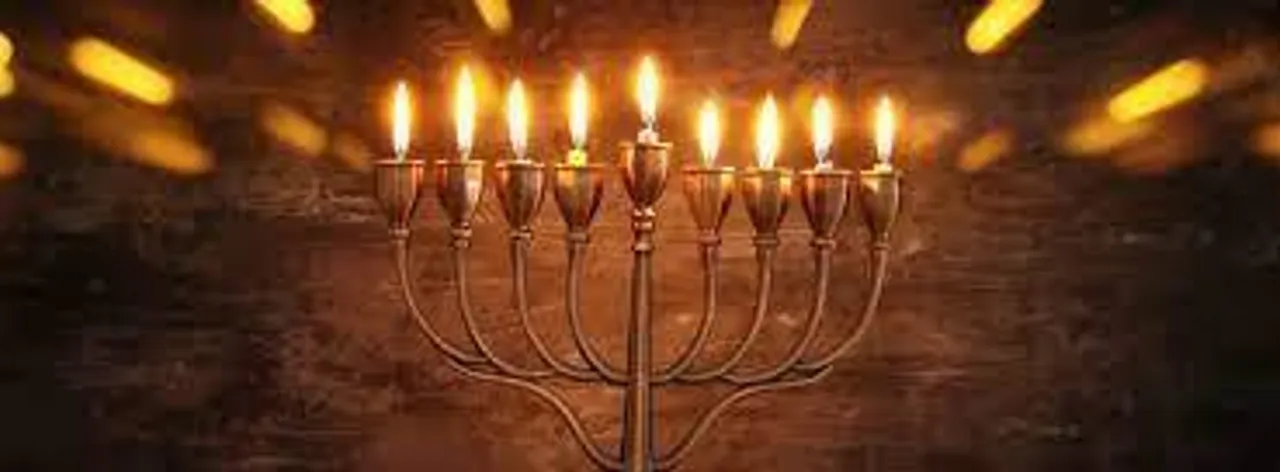
The central miracle of the Hanukkah story, the lighting of the Chanukiah, symbolizes the triumph of light over darkness. According to tradition, the menorah in the Second Temple miraculously remained lit for eight days with only a day's worth of oil. This enduring light serves as a powerful metaphor for hope and resilience. We must shine our individual and collective lights brightly.
Hanukkah calls on us to be the bearers of light and hope. It encourages us to believe in the possibility of positive change, even in the most challenging circumstances. By kindling the Chanukiah and sharing its light, we can inspire others to embrace hope.
The Hanukkah story ultimately culminates in the rededication of the Second Temple and the reestablishment of religious freedom. This act of unity and reconciliation reminds us of the importance of coming together to rebuild and heal after periods of conflict and strife. We must work towards that day.
Hanukkah's messages of resilience, hope, and unity remain as relevant today as they were in ancient times. In a world grappling with anti-Semitism and war, the story of Hanukkah serves as a timeless reminder of the power of the human spirit to overcome adversity. By drawing inspiration from the Maccabees' courage, the symbolism of the Chanukiah, and the importance of unity and reconciliation, we can transform the Hanukkah story into a message of hope and a call to action in the face of hatred and conflict. In doing so, we can strive for a brighter, more peaceful future for all, where Jews live peacefully in their rightful State of Israel and the Palestinians find peace and security in their own, separate homeland as well.
Schechter Bergen admits students of any race, color, national and ethnic origin to all the rights, privileges, programs, and activities generally accorded or made available to students at the school. Schechter Bergen does not discriminate on the basis of race, color, national and ethnic origin in administration of our educational policies, admissions policies, scholarship and loan programs, and athletic and other school-administered programs.